

 Last updated Jan 22, 2026




Liz Coleman / Cats.com
Yes, it’s true! Just like dogs and people, cats can develop Alzheimer’s disease (a form of dementia.) Technically, the condition is referred to as cognitive disorder or cognitive dysfunction, but clinically, it’s the same problem seen in people.
Typically, Alzheimer’s in cats affects felines who are middle-aged and older (often referred to as senior or geriatric,) and it’s unlikely to see the condition in cats younger than 10-12 years of age.
What Is Cognitive Disorder?
Cognitive disorder, cognitive dysfunction, or cognitive dysfunction syndrome (CDS) is a condition where the cognitive centers of the brain in the cerebral cortex reduce normal functioning. The cerebral cortex is responsible for response to the surrounding environment, vision, hearing, sleeping, eating, and other core functions.
Cognitive dysfunction syndrome is a diagnosis of exclusion, meaning all other potential causes must be ruled out first. Conditions like arthritis, kidney disease, diabetes, hyperthyroidism, hypertension, clinical anxiety, and others that also affect older cats, can also affect their mobility, behavior, and how they interact with their environment.
There is no single true cause of CDS. In humans, Alzheimer’s is caused by an abnormal build-up of proteins called amyloid and tau tangles in and around brain cells. This is one specific cause of dementia in people (and the most common).
Build up of amyloid protein is one potential cause of CDS in cats and other animals. However, there are other changes that have been found in the brains of cats that likely also contribute:
- gradual atrophy of the cerbral cortex and basal ganglia (deep area of the brain responsible for learning, memory, emotion, and other core functions)
- gradual loss of neurons (that send signal through the brains)
- increased ventricle size (fluid-filled spaces in the brain)
- vascular/blood flow changes
- accumulation of lipofuscin (a fat-protein) in neurons
Theories for these changes include normal aging and degeneration, genetics, and chronic inflammation.
Symptoms of Alzheimer’s in Cats
There are various signs of cognitive disorder. Not every affected cat will display all of these signs, but any of the signs seen in an older cat could indicate cognitive impairment.
Additionally, because these signs may be associated with other, more serious conditions, you should see our veterinarian if your cat exhibits any of these signs.
Signs and symptoms that may be seen include:
- Disorientation
- Lack of interest in playing with the owner or other pets
- Excessive sleeping (this may be normal in older cats or those in whom human interaction is limited)
- Altered sleep-wake cycles
- Staring blankly into space or at walls, as well as getting stuck in a corner, room, or closet and not being able to find its way out
- Urinating/defecating outside the litter box (this can be a sign of GI, urinary or musculoskeletal disease as well)
- Episodes of loud vocalizing, often at night
How Is Alzheimer’s in Cats Diagnosed?
As in people and dogs, there is no specific test for cognitive disorder. Rather, it is considered a rule-out diagnosis. This means that testing must be done to rule-out other diseases that can develop in older cats and which may mimic CDS.
Also, because cats with cognitive dysfunction are older and likely to have some medical problems, it’s important to know if a cat that is ultimately diagnosed with cognitive disorder also has any other underlying, especially asymptomatic, problems that must also be treated along with the cognitive disorder.
Your veterinarian may recommend the following tests to help establish a diagnosis of CDS and also determine if any other underlying issues are present which require attention.
Thorough History and Examination

The examination may reveal a cat that seems “lost” or “senile”. Chris Vanderhoof / Cats.com
The first step a vet takes is questioning the owner and examining the cat. The owner frequently mentions several or many of the clinical signs mentioned above.
The examination may reveal a cat who seems “lost” or “senile” by the way they interact and move about the exam room. Sometimes cats with cognitive dysfunction appear fairly normal during the visit, especially early in the course of the disease.
If the owner mentions that clinical signs are commonly noticed at home but not present during the examination, collecting a recording of the cat to send for review can be very helpful
ECG and Other Heart Disease Testing
Older cats may have heart disease, and in those cases in which heart disease is not detected during the physical exam, an electrocardiogram (ECG) may provide further evidence of suspected heart disease.
Other tests for heart disease can include a proBNP blood test that screens for heart enlargement, and an ultrasound of the heart to look for thickened muscles, abnormal valve movement, and abnormal heart chamber enlargement.
Blood Pressure
Hypertension, or high blood pressure, can occur in older cats. It may be secondary to kidney disease, heart disease, or may occur by itself. Hypertension can lead to behavior changes, restlessness, and vascular events (like small hemorrhages or blood clots).
Blood and Urine Testing
This testing is critical for all cats and something I do at least annually and preferably twice annually in my patients.
Blood and urine testing helps screen for conditions that may present with cognitive signs including diabetes, liver disease, and hyperthyroidism.
These conditions must be addressed. Once corrected, signs that resembled those of cognitive dysfunction may resolve if one of these (or other) medical conditions were actually the underlying cause (and not true CDS).
How is Alzheimer’s in Cats Treated?
A number of natural therapies have been recommended for treating cognitive disorder in pets, including Omega-3 fatty acids (fish oil), antioxidants (vitamin C and E, resveratrol), herbs (such as ginkgo biloba) and nutritional supplements (including SAMe, phosphatidylserine and phosphatidylcholine).
Since it is beyond the scope of this article to have an in-depth discussion of each therapy, I will focus on two that have been well researched.
SAMe (Novifit, Virbac)
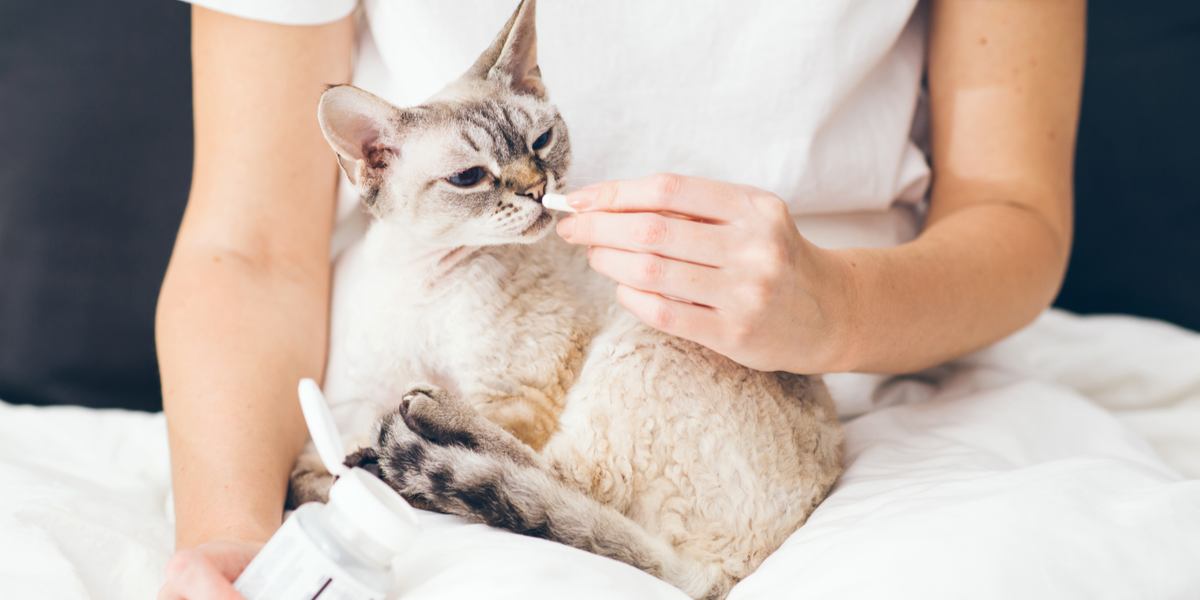
It has been suggested that aging people and pets begin to lose cholinergic receptors and have decreased levels of acetylcholine. Veera / Shutterstock.com
SAMe is formed in the body and is not supplied in the diet. SAMe functions as a methyl donor in the formation of a variety of compounds (neurotransmitters, proteins, membrane phospholipids, nucleic acids, choline, etc.) and increases levels of serotonin and dopamine metabolites, improves neuron membrane fluidity, and enhances binding of neurotransmitters to receptors.
Levels of SAMe decline sharply after birth and continue to decline as part of the aging process; decreased SAMe may contribute to cognitive decline in cats.
Sixty days of use of Novifit should be tried to assess effectiveness.
Phosphatidylcholine (Cholodin, MVP Laboratories)
Choline is a component of several major phospholipids (including phosphatidylcholine and sphingomyelin) that are critical for normal cell membrane structure and function.
The body uses choline for many reasons including the production of the nerve transmitter acetylcholine. Supplemental choline may increase the production of acetylcholine in older pets and reverse clinical signs of cognitive disorder.
Choline supplementation is very safe.
It has been suggested that aging people and pets begin to lose cholinergic receptors and have decreased levels of acetylcholine.
Since oral choline administration increases plasma choline levels, and since brain levels of acetylcholine increase as plasma choline levels increase, administering choline may improve neurological disorders that result from decreased acetylcholine.
Choline, specifically the patented product Cholodin (MVP Laboratories), has been shown in studies done in my hospital to reverse clinical signs of cognitive disorder in both dogs and cats.
At the conclusion of the study (two months following treatment), owners were asked to evaluate improvement in clinical signs: 82% of dogs showed improvement as did 77% of cats.
In my practice, because cognitive disorder tends to be diagnosed earlier than those in the study I conducted of pets in the North Texas area, my response is over 95% improvement.
Additionally, due to our preventive wellness programs, we tend not to see as many chronic diseases like cognitive disorder as frequently as seen in the general population of pets who do not frequent holistic doctors.
Anipryl (selegiline)
Anipryl (selegiline) is a pharmaceutical (drug) therapy that is indicated for the control of signs associated with canine Cognitive Dysfunction Syndrome (CDS) and control of uncomplicated pituitary-dependent hyperadrenocorticism (PDH, Cushing’s disease.)
Anipryl is a selective monoamine oxidase -B inhibitor. This may enhance catecholamine neuron activity and increases dopamine levels in dogs, thus improving cognitive signs. It is not approved for use in cats but can be prescribed off-label, which is common in veterinary medicine. Selegiline is not used widely in cats but may be helpful if natural therapies do not achieve the desired results.
Mental Stimulation

Cognitive disorder is the most common chronic, progressive neurological disorder of older cats. Liz Coleman / Cats.com
Finally, don’t forget the importance of ongoing interaction and mental stimulation for your cat, including maintaining a stable routine and regular play time.
Regardless of the treatment chosen, early diagnosis and intervention is key to minimizing the incidence of cognitive disorder in pets. Regular “senior pet” checkups that include a full physical examination, blood profile, urinalysis, and microscopic fecal analysis, ideally every six to 12 months for pets five years of age and older, will facilitate communication and allow for early diagnosis.
In my practice, for treatment I tend to prefer choline supplementation plus fatty acids and antioxidants; other herbs and/or homeopathics may also be tried. Because each cat is an individual, so too the treatment needs to be tailored to the needs of each individual cat. Additionally, feeding a healthy diet is also important.
Frequently Asked Questions
What are the signs of Alzheimer's in cats?
Signs include forgetfulness, vocalizations, disturbances in sleeping cycles, and staring into space.
What does cat dementia look like?
Owners often report that the cat seems spacey or distant, and at times unaware of its surroundings. Sometimes the complaint is more vague such as the cat just seems different or isn’t itself.
Why does my elderly cat yowl?
There are many reasons for this including normal behavior, attention seeking, pain, discomfort, or cognitive disorder.
Do older cats get confused?
Yes and this is a classic sign of cognitive disorder, especially in the more advanced stages. Confusion can occur with any problem that interferes with normal cognitive brain function including cognitive disorder.




Thank you, so very much. I really appreciate it. I’ll look for a free-fear vet in the area!
Hello!
I have four older cats, and one in particular will start to yell if we’ve left the room while she sleeps. She will just yell, until we call for her or go get her. She’s is a very goofy cat, in general, and is grieving two other of our cats who passed away this year (thyroid disease.) They are not typical; they were a family of Feral cats, that we adopted (mom, dad and three kittens) and then Baby (the odd one our, who hollers, and wants to be held and carried everywhere) that my dog Pumpkin found and brought home one winter.
I live in Arlington, WA and was wondering if you knew of any Veterinarians in my area who follow your approach?
Thank you,
Kimberly
Hey Kimberly! I apologize for the late reply. It’s been a while since we’ve done work with Dr. Messonnier, and I’m not sure he’ll see this message. However, it sounds like your cat is stressed by the loss of her relatives and has an anxious personality in general. I would do a search for Fear-Free certified veterinarians, especially those who specialize in cats. A vet who understands, not only the physical, but the emotional side of feline wellbeing, is what you need.