
 Last updated Jan 20, 2026



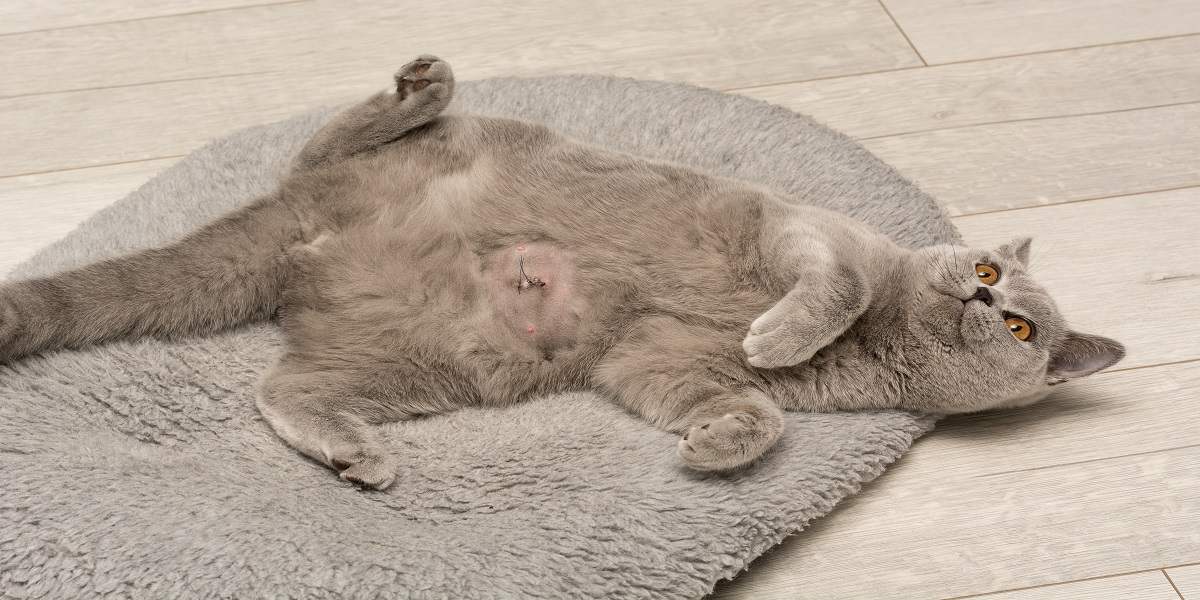
This article explains the details of peritonitis in cats. The aim of this article is to provide a simple, clear explanation about peritonitis for cat owners whose pets may be affected, and who want to understand more about what’s happening.
Quick Overview: Abdominal Cavity Inflammation (Peritonitis) in Cats
 Urgency: High
 Requires Vet Visit: Yes
 Seen in Cats: Moderately Often
 May be Linked to: Trauma, penetrating injury, Bacterial infection, viral infection (feline infectious peritonitis FIP), ruptured cyst or abscess, severe pancreatic inflammation, opened surgical site, ruptured gall bladder or urinary bladder, cancer.
 Treatment Options: Knowing the specific cause to focus specific treatment. Supportive care with drainage and/or abdominal lavage, antibiotics, pain medication, intravenous fluid therapy, nutritional support.
 Common Symptoms: vomiting, dullness, diarrhea, abdominal pain, swollen abdomen, inappetence
What Is Peritonitis?
Peritonitis is defined as inflammation of the lining of the abdominal cavity (also known as the peritoneal cavity), with fluid and inflammatory debris gathering around affected areas.
The peritoneum is the name given to the lining of the abdominal cavity. It’s like a layer of plastic wrap (Saran wrap) which is adherent to the muscles that line the inside of the abdomen, as well as to the outsides of all of the organs (intestines, kidneys, bladder etc).
A small amount of oil-like peritoneal fluid is produced by the peritoneum, and this normally allows a slippery, smooth, movement of intestines and other organs against each other.
When the peritoneum becomes inflamed, it becomes thickened (more like kitchen towel than plastic wrap), and copious amounts of abdominal fluid and inflammatory cells are produced by the immune system. This fluid accumulation causes the abdomen to swell.
What Causes Peritonitis
There are two main types of peritonitis: septic and aseptic.
Septic peritonitis
Septic peritonitis is caused by bacterial infection, with common causes including wounds that penetrate the abdomen, surgical complications (such as breakdown of a previous surgery), damage to the gastrointestinal tract (intestines or stomach) and extension of infection from the urogenital tract (e.g. a ruptured uterus or a ruptured urinary bladder).
Septic peritonitis can be generalized throughout the abdomen, or it may be confined to pockets (e.g. an abscess). This is known as secondary peritonitis. The primary cause is the issue that goes wrong in the first place, allowing the infection to develop. Primary peritonitis, without an underlying cause, is rare.
Aseptic peritonitis
Aseptic or sterile peritonitis can happen with feline infectious peritonitis (FIP, caused by a coronavirus), inflammation of the pancreas (pancreatitis), cancer, liver disease, disease of the bile system (such as a ruptured gall bladder), and inflammation of fat (pansteatitis). The same changes, including fluid accumulation develop, but there are no bacteria present, and culture of the fluid would yield no bacterial growth.
How Common Is Peritonitis?
The incidence is difficult to estimate, but peritonitis is seen regularly by most veterinarians as a cause of serious illness in pet cats.
Symptoms of Peritonitis in Cats
Cats with peritonitis are often very quiet and obviously not themselves, often hiding away.
The most common signs of peritonitis are:
- Dullness
- Vomiting
- Diarrhea
- Abdominal pain
- Swollen abdomen
- Inappetence or anorexia
- Weight loss (over a period of time)
Cats showing these signs should be taken to their local small animal veterinarian without delay, and the diagnosis will be made after an examination and investigation.
Diagnosis of Peritonitis
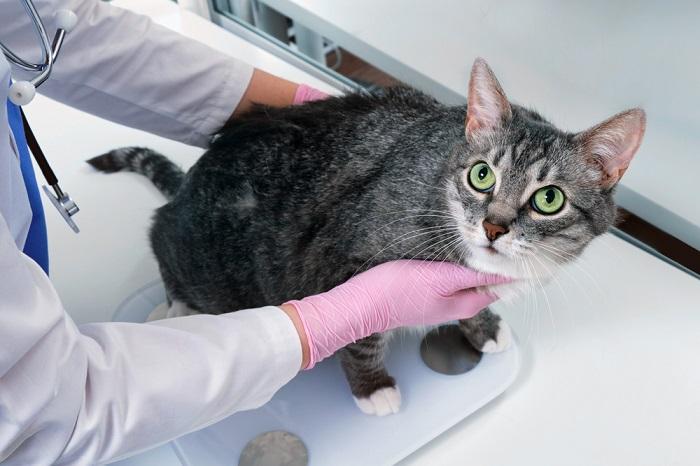
There may be multiple steps to achieve a diagnosis of peritonitis, and to determine an underlying cause.
If your veterinarian suspects that your cat may have peritonitis, the following steps may be taken.
1. Detailed History Taking
Your vet will discuss every aspect of your cat’s condition and overall health care, looking for clues about why your pet is unwell.
2. Physical Examination
Your veterinarian will check your cat over carefully, checking for the signs of peritonitis. Often, affected cats will tense their abdominal muscles during palpation of the abdomen (so-called “splinting”) because peritonitis tends to be painful. Often the abdomen appears distended because of the accumulation of fluid. Fluid in the abdomen is called abdominal effusion, or ascites.
Other clinical signs of peritonitis may include:
- Pale gums
- Dehydration
- Altered body temperature (either fever or hypothermia)
- Jaundice (icterus)
- Altered heart rates (either slow heart or rapid heart rate) and rhythm (an irregular heart beat or cardiac arrhythmia).
3. Routine Blood Tests and Urinalysis
It’s very likely that your veterinarian may carry out blood work, including the usual panel of diagnostic tests, such as hematology (complete blood count) and biochemistry profiles.
Typically, but not always, abnormalities include a raised white blood cell count (leucocytosis with elevated neutrophil count in particular), although in some cases the white cell count may be depressed.
Biochemical changes may include reduced protein levels (e.g. albumin) due to leakage from the circulation into the peritoneal fluid, elevated liver enzymes, altered pancreatic enzymes, changes in electrolyte levels, and sometimes high kidney parameters. A chemical called lactate may be measured, and this can help to give a more accurate prognosis in some cases. Higher lactate levels can be associated with a poorer outcome.
Urinalysis will be carried out as with many other sick cats, as part of a general investigation.
4. Specialized Blood Tests
Your veterinarian may recommend specific blood tests for some viral infections such as FeLV and FIV, since these can be linked as potential underlying causes of peritonitis and there are significant implications if your cat is positive for either of these.
5. Fluid Analysis
Analysis of fluid collected from the abdominal cavity can be a useful way of learning more about peritonitis: fluid can be sampled with a syringe and needle by a technique known as abdominocentesis. This can either be processed in house or sent to an external laboratory. The fluid will be analysed to determine the type of cells contained, the protein levels, and sometimes bacterial culture will be carried out.
Diagnostic peritoneal lavage may be recommended: this is when sterile fluid is introduced into the abdomen, then suctioned out again. Analysis of the cells present can help to make a specific diagnosis in some cases.
6. Additional Tests
Ultrasound is a very sensitive way of identifying free fluid in the abdomen. Free abdominal fluid, or ascites, is commonly seen with peritonitis. Ultrasound is an ideal tool for these cases because a lot of detail can be seen.
Ultrasound can see fluid well and more importantly, can see through fluid easily. If there is fluid present with peritonitis, ultrasound can see how much and its general consistency (thin, thick, etc.) Ultrasound can look at each abdominal organ in detail and can be used to assess lymph nodes throughout the abdomen.
Because some types of gastrointestinal disease can lead to peritonitis (especially foreign material, blockages, tumors) ultrasound is also very useful for assessing the GI tract in detail as a contributing factor.
Being able to see these details may reveal important clues about the source of peritonitis. Ultrasound can also be used to safely collect a good sample of fluid for testing. If an abnormality in an organ or lymph node is seen, a sample of cells can be collected using a small needle and syringe for cytology. Samples like this may also help provide important clues about the cause of peritonitis.
Radiographs (x-rays) may be taken of the abdomen. These may show signs of fluid accumulation, which causes the loss of contrast and lack of detail in the x-ray image. Intestinal obstructions or abdominal masses may be identified. X-ray is sometimes helpful as a screening tool for abdominal discomfort or enlargement but often lacks needed details, especially if abdominal fluid is present.
Blood pressure measurement may be carried out to assess your cat’s general level of stability.
Your veterinarian will advise you on which detailed investigations are needed.
How Much Does It Cost To Treat a Cat With Peritonitis?
It is impossible to estimate this cost, as there are so many possible factors going on in the background of individual cases. You should ask your veterinarian for a detailed estimate before agreeing to proceed with treatment. Costs could vary from $400 for a simple case to $4000 or more for an exceptionally complex case of peritonitis.
Treatment of Peritonitis
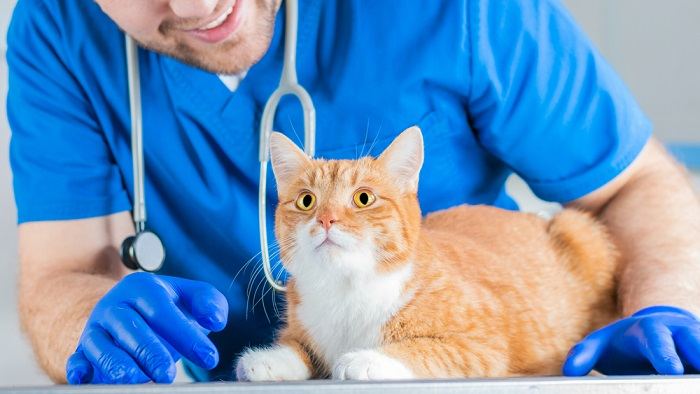
Cats with peritonitis may need intensive treatment and nursing at the vets
In general, the aim is first to stabilize a cat affected by peritonitis, and then to identify and treat the underlying cause. Stabilization involves intravenous fluid therapy to rehydrate and support the patient, along with broad spectrum antibiotic therapy if septic peritonitis is suspected.
Surgical intervention is often needed to identify and treat the underlying cause (e.g. intestinal rupture, foreign bodies, penetrating wound, cancerous tumor, etc). This type of surgery is complex: the peritoneum has often become thickened, with adhesions where parts of the abdomen have stuck to other parts.
As well as this specific treatment, open abdominal drainage may be recommended for a few days. This involves leaving the abdominal surgical wound open rather than suturing fully closed, and using bandages and dressings to absorb fluid draining from the abdomen. Such cases need careful nursing, with careful observation for hemorrhage or other complications.
A biopsy may be collected during the surgical procedure if the cause remains uncertain (e.g. a mass which may or not be cancerous).
Ongoing supportive intravenous fluids, antibiotics, pain relief and intensive nursing (sometimes including nutritional support such as a feeding tube) is usually needed for a few days after surgical intervention.
Monitoring and Prognosis
Intensive monitoring and updated treatments are essential, and the prognosis varies significantly depending on the underlying cause. This is a serious condition, with a high mortality rate. Perhaps only 50% of cases survive to make a full recovery.
Conclusion
Peritonitis is a serious condition that requires intensive veterinary investigations and treatments. Early intervention is more likely to be successful.